
If you received a 1099 form and thought, “What is this?” you’re not alone.
Every year, millions of people get their first 1099 and realize something important:
No taxes were taken out.
That’s the moment people start searching the internet, asking friends, or posting questions online.
This guide will clarify the key points: what a 1099 is, why you received one, how taxes work on 1099 income, and what the IRS expects from you. Key takeaways: you’ll understand the basics of 1099s, IRS expectations, and where to find more guidance. We’ll keep it simple so everyone can understand. This guide helps but does not solve your problem or give specific tax advice.
What Is a 1099 Form?
A 1099 form is a report that tells the IRS someone paid you money.
That’s all it does.
It isn’t a bill or a tax calculation. It doesn’t show the exact amount due. It just reports that you were paid.
It simply tells the IRS:
“We paid this person money.”
The IRS expects you to report that income on your tax return.
Think of a 1099 like a receipt that the IRS also receives.
The Simple Example
Imagine this.
You help someone build a deck for their house, and they pay you $5,000.
Instead of hiring you as an employee, they treat you as an independent contractor.
At the end of the year, they send you a form called Form 1099-NEC that says:
Nonemployee Compensation: $5,000
They also send that same information to the IRS.
The IRS then expects you to report that $5,000 on your tax return.
Why Some People Get a W-2 Instead
Many people are used to receiving a W-2 from their employer.
A W-2 means:
- You are an employee
- Taxes were withheld from your paycheck
- Your employer pays part of your payroll taxes
A 1099 is different.
When you receive a 1099:
- You are treated as self-employed
- No taxes were withheld
- You are responsible for reporting the income
That’s why many people are shocked at tax time.
No one has been saving money for the IRS during the year.
The Biggest Surprise: Self-Employment Tax
Most people don’t expect this part.
Self-Employment Tax is for “Social Security and Medicare.”
- Employees pay about 7.65%
- Employers pay another 7.65%
But when you are paid on a 1099, you are both the employee and the employer. Thus, you pay the full 15.3% self-employment tax.
That tax is added to your income tax.
What Actually Gets Taxed
Here’s the good news.
You are taxed only on your profit, not all your income.
Profit simply means:
Income − Business Expenses
Example:
1099 income: $10,000
Expenses (you document and can support):
- Equipment: $1,500
- Mileage: $1,000
- Supplies: $500
Total expenses: $3,000
Your taxable profit becomes:
$10,000 − $3,000 = $7,000
Taxes are calculated on that $7,000, not the full $10,000.
Where This Appears on Your Tax Return
When you receive 1099 income, it is typically reported on:
Schedule C – Profit or Loss from Business
This form calculates the net profit mentioned above.
That net profit flows into your overall tax return.
If there is profit, the self-employment tax is also calculated and owed.
The Most Common Types of 1099 Forms
Many people think there is only one 1099.
There are several types of 1099 forms.
Form 1099-NEC
Used when a business pays an independent contractor, freelancer, or gig worker $600 or more (changing to $2,000 in 2025). Examples include Uber or Lyft contract drivers in most places.
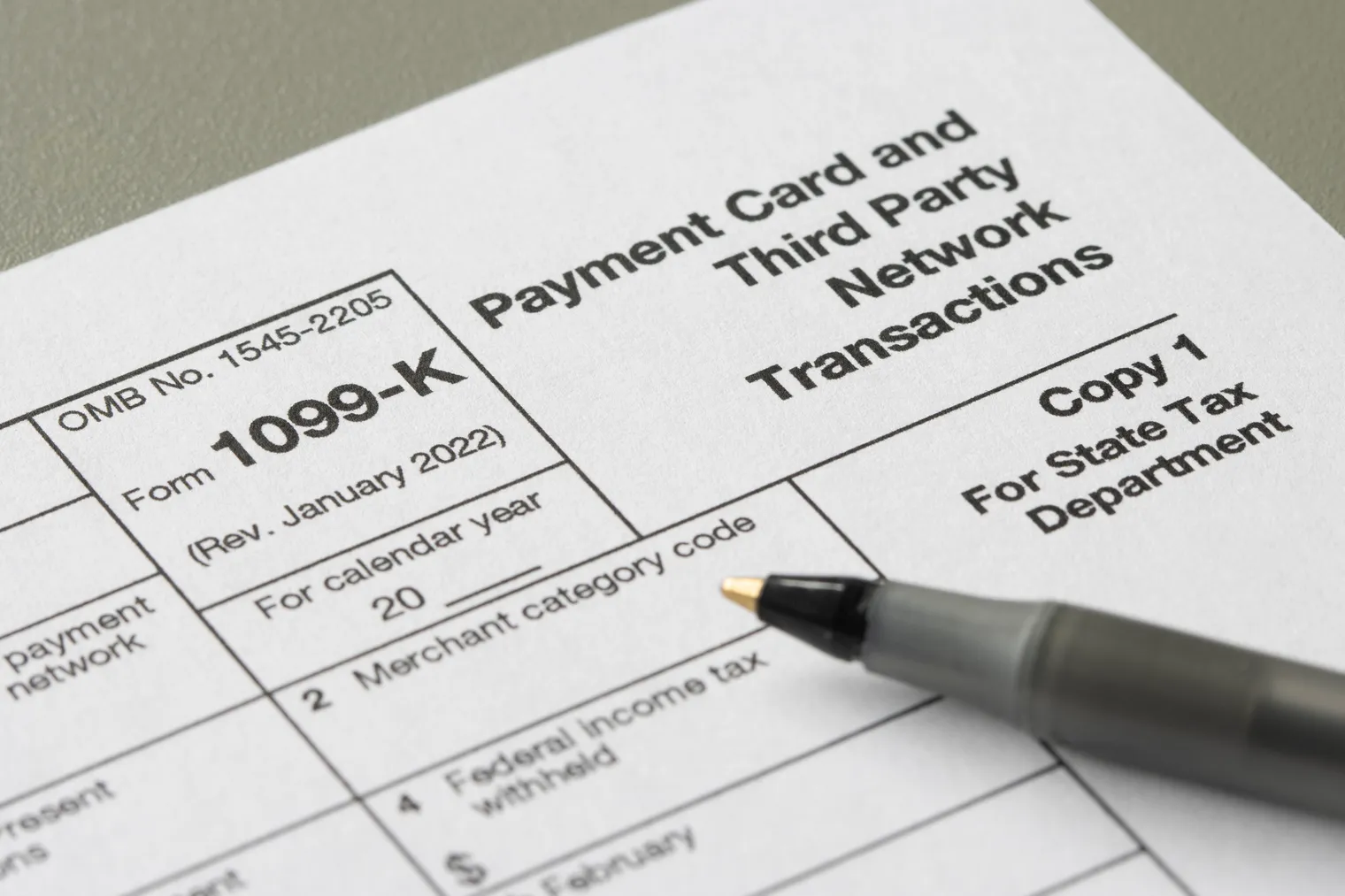
Form 1099-K
Used by payment platforms such as PayPal, Venmo, or marketplaces like eBay or Etsy.
Form 1099-MISC
This form covers miscellaneous payments such as rent, prizes, and some legal payments.
Form 1099-DA (New Crypto Reporting)
Digital asset brokers are beginning to report cryptocurrency transactions on Form 1099-DA.
This is an evolving area, and many taxpayers need professional help to report this correctly.
A Common Myth: “If I Didn’t Get a 1099, I Don’t Have to Report It”
This is one of the biggest misunderstandings. The law requires you to report all income, even if you did not receive a 1099. Gifts are not taxable, but income is.
A 1099 helps the IRS match records.
But the responsibility to report income still exists.
Another Myth: “A 1099 Means I Have My Own Company”
Receiving a 1099 does not automatically mean you formed a business entity.
Most 1099 earners file as sole proprietors using Schedule C, not as an LLC or corporation.
Why Some Jobs Are Misclassified
You may have heard people say:
“My employer made me a 1099, but I feel like an employee.”
That situation does happen.
The IRS has rules that determine whether someone should be classified as:
- an employee (W-2)
- an independent contractor (1099)
Generally, contractors control:
- how they work
- when they work
- what tools they use
Employees usually work under the company’s direction.
Most with 1099 income are legitimate contractors, though misclassification does occur.
The Part People Forget: Quarterly Taxes
When you earn 1099 income, the IRS expects taxes to be paid during the year, not just in April.
These are estimated payments you send four times a year. If you have a higher income, consult a pro.
They are typically due:
- April
- June
- September
- January
Many miss this and face penalties.
Why So Many People Panic in April
The pattern is almost always the same.
Someone works all year and receives 1099 income.
No taxes were withheld.
April comes, and they owe thousands.
The tax rules aren’t the problem.
The problem is that no one explained the system early enough.
How to Stay Ahead of 1099 Taxes
A few simple habits can make the process much easier.
- Keep track of income as you earn it.
- Save at least 20% of payments for taxes.
- Track expenses and mileage throughout the year.
- File your required forms correctly.
When you report correctly, managing 1099 income is easier.
Where Filing Platforms Come In
Many small businesses, freelancers, and independent contractors struggle with the paperwork side of reporting.
Businesses issue forms. Contractors receive forms. And everything must be reported correctly to the IRS.
Platforms like TaxAidFiling.com are designed to simplify this process by helping businesses prepare and file required information returns while ensuring the IRS receives accurate records.
For example, if you received a 1099 for doing lawn care but also pay friends to help you, you’ll need to send them a 1099-NEC if they are not employees. Our tool can help you do it right.
This helps reduce mistakes, missed filings, and compliance issues that can create problems later.
The Big Picture
A 1099 simply means you were paid outside of traditional employment.
That income still needs to be reported.
The IRS expects taxes to be calculated based on profit, not just revenue.
Once you understand how the system works, the fear usually disappears.
Most of the confusion around 1099 income comes from a simple problem:
People get the form before learning the rules. Getting a trusted tax professional early helps you save on small business tax benefits.
Final Thought
Receiving your first 1099 can feel intimidating.
But the concept is actually simple.
A business paid you. They told the IRS. Now you report the income and calculate the tax.
That is the entire system.
Once you understand the framework, keeping good records and filing with a trusted advisor is all you need.
This article provides general educational information and isn’t intended as tax, legal, or accounting advice. Tax situations vary. Consult a qualified tax professional regarding your specific circumstances.